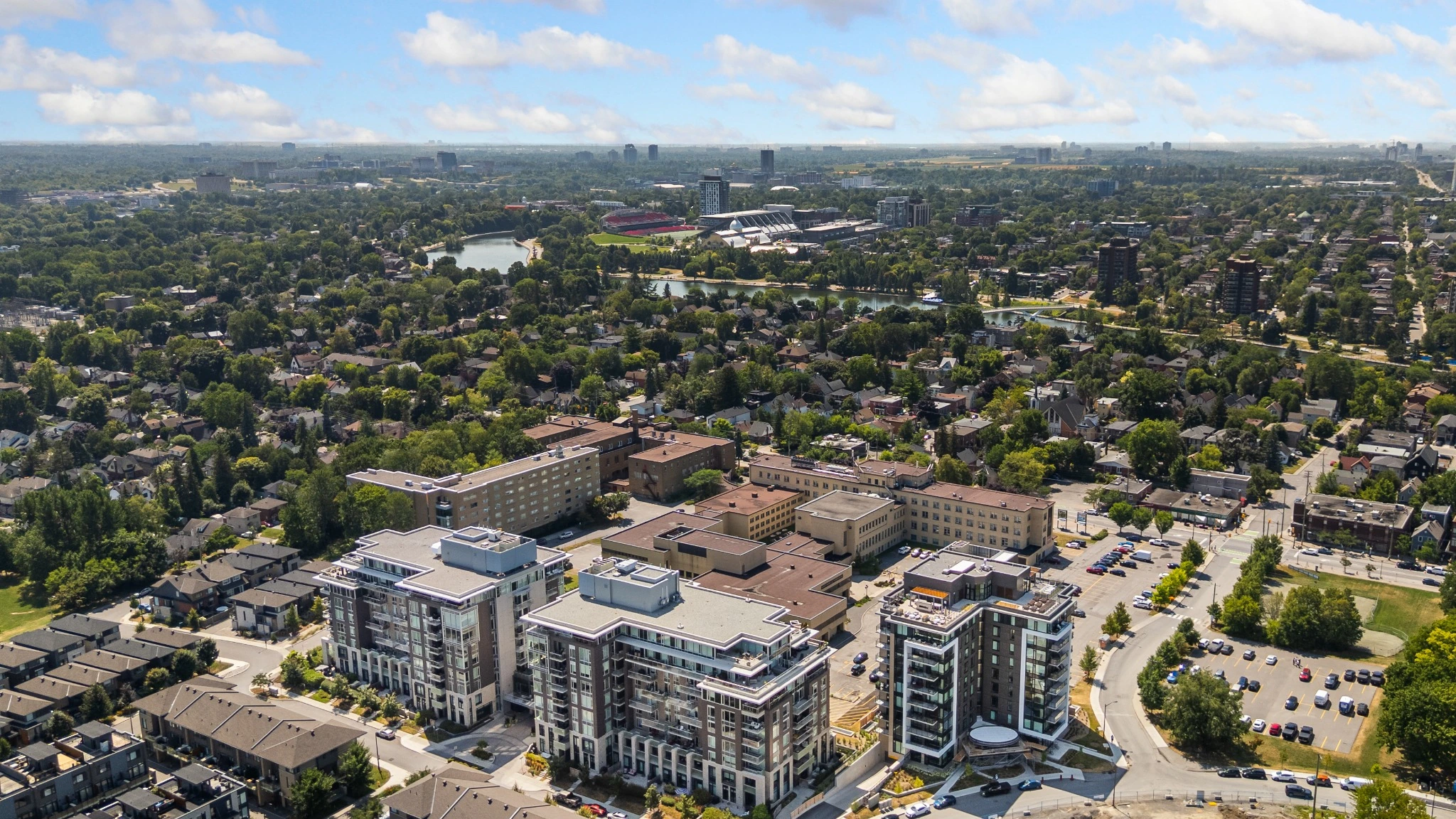
Newly written guidance, updated November 5, 2026. This page retains the original article address.
A greener home can mean different things to different buyers: a comfortable suite, thoughtful use of resources, or a location that makes daily trips easier. When an Ottawa condo is described as LEED-certified, it helps to understand exactly what that description tells you—and what you still need to check.
What is LEED?
LEED stands for Leadership in Energy and Environmental Design. It is a green-building certification framework that evaluates a project against defined requirements. The Canada Green Building Council describes certification as independent, third-party verification of a project’s environmental performance goals. Areas considered include energy and water use, materials, transportation, site development and indoor environmental quality. [1]
Certified, Silver, Gold and Platinum
These are the four LEED certification levels. A project meets prerequisites and earns credits to reach a level. The rating system and version matter too: requirements and project scope should be read alongside the level, rather than treating every certificate as the same assessment. [2]
For a buyer, the useful next question is: “Can I see the certification record and scorecard for this particular building?” That is more informative than relying on a green-building description in a listing.
Registered is not the same as certified
A building described as “registered,” “targeting Gold” or “pursuing LEED” has not necessarily achieved certification. CAGBC explicitly distinguishes registration from a completed certification award. Ask for confirmation of the final result, rather than repeating a target from an early marketing brochure. [3]
Check what was assessed, and when
LEED has different rating systems for design and construction, existing-building operations and other project types. A design-and-construction award and an operations-and-maintenance certification describe different scopes of assessment. [2] Record the project name, certification date, rating system, version and level when comparing claims.
CAGBC’s project database lets you search registered and certified projects by location and other criteria. [4] Try the building’s development name as well as its street address. If a record is unclear or missing, request documentation from the owner, developer or property manager. Absence from a public search alone does not prove that a project is uncertified: USGBC notes that confidential projects and naming differences can affect directory results. [5]
What should an Ottawa condo buyer ask?
- Does the record cover this building, or another phase of the development?
- Which features are installed and operating today?
- How are the suite’s heating, cooling and ventilation controlled?
- What utilities are included, and what is separately metered?
- Are there current records or reports that help explain how the building operates?
Our recommendation is to use certification as one piece of your comparison. Review the actual suite, building condition and available documentation rather than treating a label as a substitute for those checks.
Bring it back to everyday living
Think about the features you will use: comfortable temperatures, practical bike storage, a manageable walking route or charging arrangements that work for your vehicle. Tour the suite and ask specific questions about the building. For a practical next step, read our green condo features checklist, then browse the Ottawa building guides to build your shortlist.
Sources & further reading
- Canada Green Building Council: LEED
- U.S. Green Building Council: LEED rating system
- Canada Green Building Council: registered and certified projects
- Canada Green Building Council: project database
- U.S. Green Building Council: why a project may not appear in the directory
Sources checked November 5, 2026.